
Alzheimer’s disease is a neurodegenerative disorder that progressively affects memory and other cognitive functions (attention, language, orientation, and planning). In addition to the biological changes characteristic of the disease, brain networks involved in memory and information processing are altered.
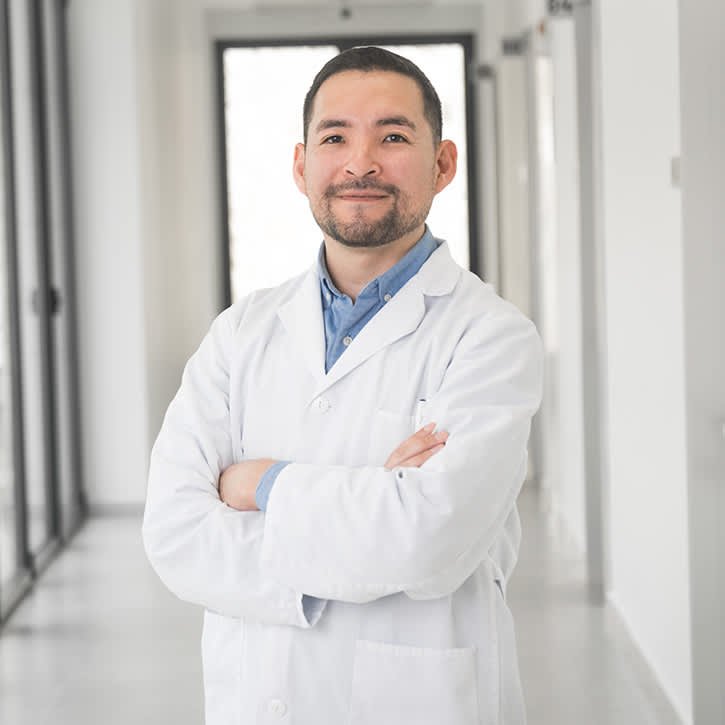
Dr. Lafuente, a specialist in Clinical Neurophysiology, has extensive experience in non-invasive neuromodulation techniques supported by scientific evidence. These techniques can contribute to improving cognitive performance and daily functioning in selected individuals, as part of a comprehensive approach.



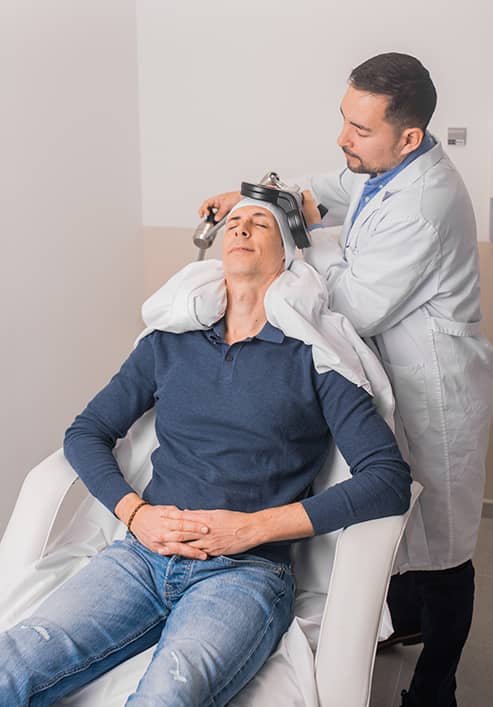
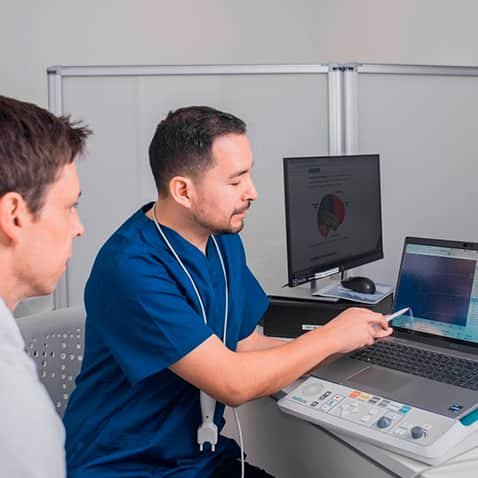
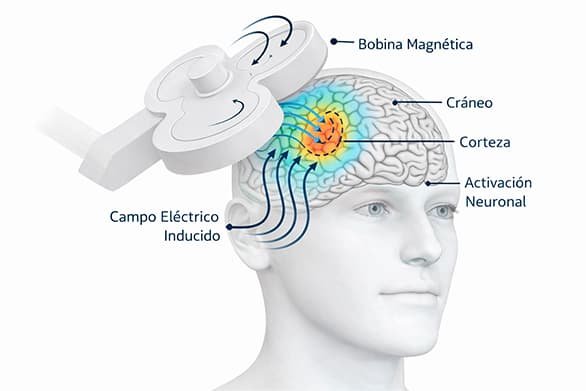
Neuromodulation offers an approach to influencing brain circuits related to cognition. Repetitive transcranial magnetic stimulation (rTMS, or TMS) is being researched and used in clinical protocols to modulate memory networks and promote improved functional connectivity.
It is a medical treatment that uses magnetic pulses to stimulate, in a controlled manner, areas of the brain involved in cognition. Some studies have focused the stimulation on the precuneus, a key region in memory networks, with promising results in cognitive measures and in slowing the progression of cognitive decline in certain individuals. It requires neither surgery nor anesthesia.
Yes. It is a medical treatment that has been used for years in hospitals and specialized centers. In most cases, the side effects are mild and temporary.
It is considered in selected cases, especially in mild or initial stages, after a personalized clinical assessment. The goal is to support cognitive function and daily living, integrating it with cognitive stimulation, exercise, sleep habits, and the medical treatment prescribed by your specialist.
The sessions are simple and well-tolerated. You remain seated and awake while the stimulation is applied in a controlled and supervised manner; no anesthesia or sedation is required. Afterward, you can resume your normal day.
During application, you may feel tapping or light pressure on your scalp. This is generally a tolerable sensation and is not considered painful, although it may be uncomfortable for some people at first.
The duration depends on the protocol: some sessions last around 20–40 minutes. The number of sessions depends on your case and is determined after a personalized clinical assessment.
Yes. It can be used as a complementary approach and integrated with prescribed medication, cognitive stimulation, occupational therapy, exercise, and lifestyle modifications. Coordination with family or caregivers is often important to facilitate adherence and follow-up.
It varies from person to person. Some notice changes in the first few weeks, while others notice them later. We monitor your progress and adjust the plan accordingly.
If you would like more information or to schedule a consultation, you can get in touch by phone, WhatsApp, or by filling out the form below.
Vithas Xanit International Hospital
Avenida de los Argonautas, s/n, 29631 Benalmádena, Málaga
Rincón Salud 101
Cam. la Palmilla, 6 (La Rosaleda Stadium), 29011 Málaga
Utilizamos cookies propias y de terceros para analizar el uso del sitio web y mostrarte publicidad relacionada con tus preferencias sobre la base de un perfil elaborado a partir de tus hábitos de navegación (por ejemplo, páginas visitadas) Política de cookies.